Author: team dotsure.co.za

  • “URINE TROUBLE!”: IS THE COLOUR OF YOUR CAT’S PEE TELLING YOU SOMETHING?

    “URINE TROUBLE!”: IS THE COLOUR OF YOUR CAT’S PEE TELLING YOU SOMETHING?


    You and your kindred kitty clock in a lot of time together.

    So, it’s no wonder you know every single stinking detail about them.

    You know when your number one gal needs to do a number two, and you also know what her urine usually looks and how it smells.

    Crappy as it may seem, knowing this information may be the key to keeping your fluffy friend healthy and happy.

    In this post, we’ll explore the most frequently asked question about cat urine: what colour should it be?

    Let’s dive right in:


    What is cat urine?

    Cat urine is a fluid made up of water and water-soluble waste released by the kidneys of your cat. The urinary system (upper urinary tract, kidneys, ureters, lower urinary tract, bladder, and urethra) assists your cat to excrete excess water and waste from its body. Normal urine has a somewhat robust and acidic odour that is not too repulsive.


    What colour should cat urine be?

    Normal cat urine should be a clear, pale yellow. The urine should not be murky or difficult to see through.

    It’s wise to monitor your cat’s urine colour since even a trickle can help you identify potential health problems. A pinkish/reddish colour might indicate the presence of blood. If tinkle time turns into a trailer for a new horror movie (red-stained pee splatters trailing from the litterbox to the food bowl) it’s time to visit your vet!


    D.I.Y urinalysis test for cats.

    This D.I.Y urinalysis test is not a substitute for professional medical tests, but using our cat pee colour chart could help you understand when you need to take your cat to the vet for a proper medical analysis. For an indication of what your cat’s urine should look like, check out the chart below:

    Cat Urine Colour Chart | Dotsure

    Cat urine colour chart table:

    Urine colour What it’s telling you
    Pale yellow Normal urine of a well-hydrated cat
    Dark yellow Possible dehydration. Try moist food and adopt measures to boost water consumption, such as water fountains and other methods to encourage drinking.
    Brown Indication of blood in the urine. Most likely due to a urinary tract infection, cystitis, crystals, autoimmune illness, blood parasite, kidney disease, or cancer. Please consult your vet.
    Red Fresh blood in the urine signals a probable urinary tract infection, cystitis, crystals, autoimmune illness, blood parasite, kidney disease, or cancer. Please consult your vet immediately.


    Other Frequently asked questions

    Is male cat pee the same colour as female cat pee?

    Yes, both female and male healthy cats will produce pale, yellow-coloured urine. Intact male cats may produce more concentrated urine.


    How can I tell if my cat has a UTI?

    Some of the common symptoms include:

    • Inability to urinate
    • Loss of bladder control
    • Urinating small amounts
    • Urinating more than usual or away from the litter box
    • Unusually stronger ammonia odour in urine
    • Murky or bloody urine
    • Drinking more water than usual.


    RELATED TOPICS:

    Why is my neutered cat urinating like that?

    Friends/family allergic to your pet? Here’s how to reduce the sneezing.

    Stunning looks. Expensive food bill. Pros and cons of Maine Coon cats.


    This blog is intended for informational purposes only and should in no way be regarded as a substitute for professional veterinary advice.

    Reference: Tyler, Ronald, Jr., DVM, MS. In-House Veterinary Pathology for the Busy Veterinary Practice – Clinical Urinalyses: Techniques and Interpretations. Southwest Veterinary Symposium 2016.


  • PAUPERIEN LIABILITY: THE DOG BITE LAW THAT COULD COME BACK TO BITE YOU

    PAUPERIEN LIABILITY: THE DOG BITE LAW THAT COULD COME BACK TO BITE YOU


    For most of us, our dogs are our children, and it is difficult to imagine that they can cause any harm.

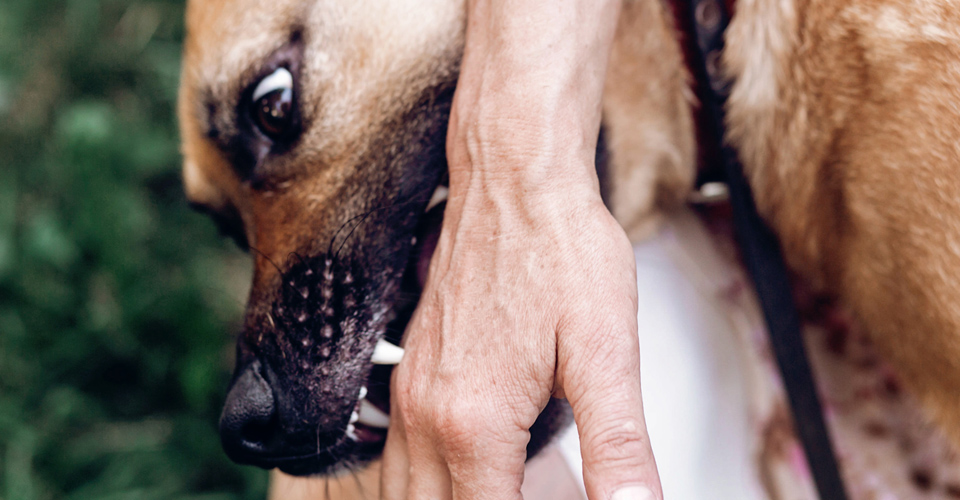
    Unfortunately, dog bites can inflict serious injuries or even cause the death of a person or animal.

    Anybody who has suffered damages caused by a dog bite can use the pauperien action to claim the damages from the dog’s owner.

    It is important to understand that a dog owner can be liable to pay the damages that were caused by the dog, sometimes without the owner being at fault.


    What is pauperien liability?

    The actio de pauperie, which deals with damages caused by domesticated animals, has its origin in the ancient Roman law that was written around 450 BCE. That explains why we still use a Latin term for this legal principle. In essence, it provides a way in which a person who suffered harm caused by an animal can claim damages from the owner of that animal, even where the owner was not at fault.  Nowadays it is mostly used in dog bite cases.


    Requirements for a successful pauperien claim after a dog bite.

    For a claimant to be successful with the pauperien action, there are certain requirements.  These are:

    • The claimant can only use this action to claim damages from the owner of the animal and not from someone who just had control of the animal.
    • It must be a “domesticated” animal. It is no surprise that dogs and cats fall into this category, but tamed wild animals such as meerkats and even bees can be seen as domesticated.
    • The animal must act “against its nature”. Our courts interpret this as an animal that does not act in a decent and well-mannered way.   It is based on the “inward vice and excitement” of the animal.  Where an animal reacts to external stimuli, it is not seen to act against its nature.  The application of this is a grey area in our law.  In my opinion, there are situations where it would be natural for a dog to bite but where our courts do not regard it as natural behaviour.
    • Claimants can only claim if their presence at the place where the injury occurred was lawful. This means that a thief who was busy breaking into a property cannot claim damages, but the person who did a delivery when bitten can claim damages.


    Defences against a pauperien action if your dog bites someone.

    There are defences that dog owners can use against a claim under the pauperien action.  These are:

    • If the actions of the claimant caused the bite, the claimant will not be successful. For example, if the claimant pulled the dog’s tail, or kicked it, the action will not succeed.
    • Where a third party provoked the animal. This also includes provocation by another animal.
    • If the claimant voluntarily accepts the risk of injury. An example of this is where the owner has clearly visible signs up on the gate and fence to warn that there is an aggressive dog on the premises, and someone still chooses to enter despite the signs.

    Damages caused by dog bites can amount to millions of rands.  In a recent case in the Eastern Cape High Court in the matter of Cloete v Van Meyeren, Cloete claimed R2,4 million from Van Meyeren.  Van Meyeren was not home at the time of the incident, and it seems that an unknown person opened the gate, which allowed the dogs to get out and attack Cloete in the street.  The court ruled that Van Meyeren had to pay the damages.


    What can you do to protect yourself against such claims?

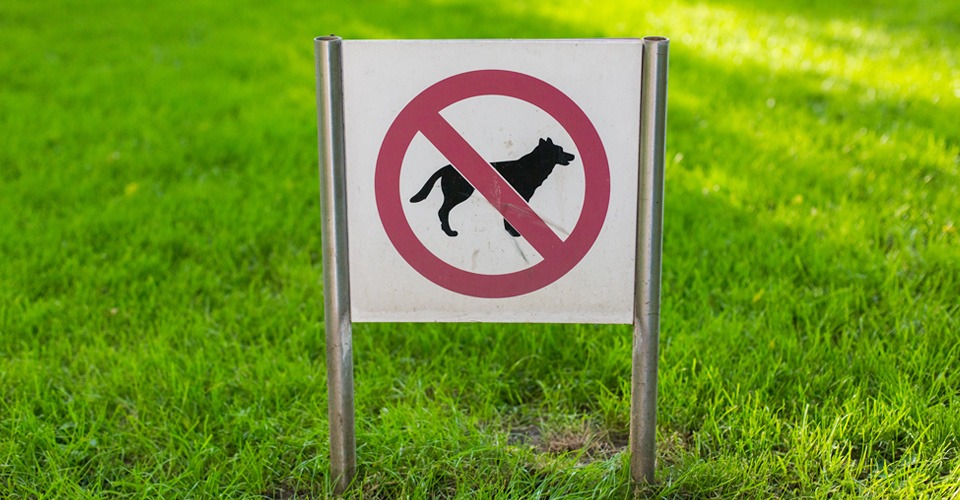
    Your dogs must always be kept securely on your property.  Always close your gates and keep them locked and make sure that anybody on your property understands the importance of this.  Make sure there are no areas where dogs can get out on their own.  If your dogs are aggressive, you must have warning signs up where people can see them and understand the danger.  It must be accompanied by a picture of an aggressive dog so that people will understand it regardless of the language they speak or if they can read or not.  If you want to take your dog to a park or public area, and you are scared that it may bite someone, always use a good quality muzzle on your dog.  Most importantly, make sure that you have personal liability insurance that will protect you in the unhappy event that your dog bites someone.


    Credentials: Dr Trudie Prinsloo is a qualified veterinarian and attorney. In 2015, she started Legalvet Services to provide legal advice to the animal health and veterinary industries in South Africa – and now she’s teamed up with us to tell us more about the dog bite law and the pauperien action. While Dr Prinsloo is a qualified attorney, she cannot give legal advice remotely. This blog is intended for informational purposes only and should in no way be regarded as a substitute for professional legal advice.

    Disclaimer: dotsure.co.za is not responsible or liable for any advice or any other information provided herein. If you have questions about pauperien liability, the best course of action is to consult an attorney.


  • THE 10 MOST CHALLENGING CARS TO STEAL

    THE 10 MOST CHALLENGING CARS TO STEAL


    We all want to be seen driving the latest and best cars the world offers (those we can afford, anyway). The trouble is – these beauties generate unwanted attention from the wrong crowds.

    According to StatsSA an estimated 64 000 incidences of hijackings occurred in 2020/21.

    If you live in SA, you’ve probably developed an extreme OCD when leaving your car in public places (double and triple-checking if your car is locked.).

    Well, if you’re upgrading your car and looking for an option that will help you live with less fear of losing your mechanical baby, we’ve got your back.


    The 10 most difficult cars to steal.

    Here’s our list of beautiful mechanical babies that are unattractive to carjackers. These cars are hard nuts to crack for car thieves.

    Jaguar XF

    Hardest cars to steal | Jaguar XF | Dotsure The Jaguar XF can also be double-locked! You don’t know what that means, but you can tell it’s bad news for the bad guy. Well, once the car is double-locked, it cannot be unlocked or started. So even if criminals crack this nut, they won’t be able to get it going. It also has a clever In-Control App that can help the SAPS track and recover your car in the unlikely event it gets stolen.


    Tesla Model S

    Hardest cars to steal | Tesla Model S | Dotsure The Model S is one of the most secure electric cars you can buy in 2022. Its anti-theft features make it a carjacker’s nightmare. Tesla owners can use their smartphones to track the whereabouts of their vehicles. Even if the burglar has hacked the system and unplugged the tracker, the car would send a ping to Tesla HQ.


    Land Rover Discovery

    Hardest cars to steal | Land Rover Discovery | Dotsure The Land Rover Discovery employs ultra-wide-band radio technology to broadcast the key’s signal across various frequencies. Therefore, the signal amplifiers or relay devices, commonly used by thieves, struggle to pick up the key’s signal, making this car harder to lockpick.


    Mercedes Benz GL 550 by TAC

    Hardest cars to steal | Mercerdes GL 550 by TAC | Dotsure What do you look for in a safe, hard-to-steal car? You look for a car with steel. One that can bounce bullets off the windshield. You can drive away from danger without worrying about gun-toting and trigger-happy thieves in such a car. Well, that’s what this GL’s bulletproof exterior gives you.


    Mercedes-Benz G63 AMG By Inkas

    Hardest cars to steal | Mercedes G63 by Inkas | Dotsure Talk about an impenetrable fortress! Inkas’s version of the G63 is reinforced with bulletproof glass, powerful armour that can withstand shotgun shots and a bottom steel plate that can endure grenade explosions.


    Nissan Leaf

    Hardest cars to steal | Nissan Leaf | Dotsure Nissan turned a new safety leaf with this one! The Nissan Leaf will not start if the car key is not within range. If it is in neutral, it will not even move! A responsive GPS tracking technology can also help locate the car. The ordinary car thief leaves this one behind.


    Volkswagen Tiguan

    Hardest cars to steal | VW Tiguan | Dotsure There’s a reason the Volkswagen Tiguan has received several honours for being the safest car. Few cars have alarm systems that can compete. This car just will not start with a different key; forget it! It also sports a stolen-vehicle tracker that can assist in tracing the vehicle from your smartphone.


    Hyundai Tucson 

    Hardest cars to steal | Hyundai Tucson | Dotsure Although most vehicle critics rated the Hyundai Tucson’s engine performance as below average, the anti-theft system did not disappoint. Cutting the cables behind the horn is the easiest method to disable a car alarm, but the Tucson doesn’t make it so easy (you’d have better luck drawing blood from a stone than disconnecting the Tucson’s alarm system).


    Audi A4

    Hardest cars to steal | Audi A4 | Dotsure One of the notable security features of the Audi A4 is that the keys contain a chip that makes it more challenging to start with other devices. The keys include a chip that is programmed into the ECU.


    Tesla Model X 

    Hardest cars to steal | Tesla Model X | Dotsure Even though it is the less expensive sister of the Tesla S, the Model X has an equal level of protection. Aside from GPS monitoring, it offers a Sentry Mode that allows the vehicle to record its surroundings even when the engine is turned off.


  • DOG DNA TESTING: IS YOUR DOG WHAT THEY SAY IT IS?

    DOG DNA TESTING: IS YOUR DOG WHAT THEY SAY IT IS?


    Dr Trudie Prinsloo is a qualified veterinarian and attorney. In 2015, she started Legalvet Services to provide legal advice to the animal health and veterinary industries in South Africa and now she has teamed up with us to tell us more about dog DNA testing. While Dr Prinsloo is a qualified veterinarian, she cannot advise on genetic diseases and issues remotely. This blog is intended for informational purposes only and should in no way be regarded as a substitute for professional veterinary advice, diagnoses, or treatment plans.

    dotsure.co.za is not responsible or liable for any advice or any other information provided herein. If you have questions about your pet’s DNA or potential genetic diseases or issues, the best course of action is to consult your veterinarian as soon as possible.


    Dog DNA testing has become a fashionable thing! It is now possible to have your dog’s DNA tested, but it is possible to do it from the comfort of your couch. You can order a DNA test kit online, have it delivered to your house, take the sample yourself, return it to the laboratory, and wait for the results. When I first heard about these tests, the sceptic in me immediately thought it was just another moneymaking scam. But the more I investigated, the more excited and less sceptical I became. So, what can these tests tell us and how accurate are they?


    What does it mean to do a DNA test?

    DNA is the acronym for deoxyribonucleic acid (yes, it is difficult to pronounce, that’s why it’s just called DNA!), which is the genetic part of cells. After a sample is collected, the DNA can be examined in a laboratory to determine the genetic origin of the individual. It can also be used to identify any genetic disorders.


    The clever geneticists tell us that 99% of the genes in all dogs are the same, which is why they are dogs. It is just about a 1% difference in the genes that lead to the various characteristics of the different breeds and other individual traits seen in dogs.


    What information can we get from DNA testing?

    Different laboratories and companies offer different types of tests. Here are some of the tests on offer:

    • Breed identification determines if your pure-bred dog is as pure-bred as the breeder told you. It can help to identify the breed composition of a mixed breed dog.
    • Your dog’s family tree can be traced back to its great-grandparents on a breed level.
    • A relative match is a new service offered by one of the largest companies doing dog DNA testing in which they test against their database to identify any of your dog’s relatives on their database.
    • Evaluate any genetic health risks your dog may have, such as drug sensitivities, genetic eye diseases, or muscular disorders.
    • Evaluation of the gut biome of your dog can help you understand how the microbes in your dog’s gut affect its health.
    • Genetic age testing determines your dog’s genetic age by measuring the telomere length. This is a more accurate indication of how long your dog can live.


    Where can it be tested?

    Several local and international laboratories can do genetic testing. Not all laboratories offer the same tests. The type of tests you want to do and the reasons for testing will influence your choice of a laboratory. If you have a serious concern about genetic diseases, it will be best to work with your veterinarian and use their recommended laboratory. Such laboratories must be registered and accredited laboratories. But if you want to find out which breeds are in your mixed breed puppy’s DNA, you can choose any laboratory that offers the test. You can find local and international laboratories that offer dog DNA testing by doing a Bing or Google search.


    How are the samples collected?

    If you order a kit online to do the test at home, each test will give you clear instructions. It is surprisingly easy to do. The tests use saliva and involve either a swab or a small brush that is rubbed on the inside of the dog’s mouth between the gum and cheek. The most difficult part is usually getting your dog to stay still while you are collecting the sample. Depending on the specific kit, the sample is either placed in a transport medium and closed or dried and placed in an envelope. After sealing it, it is sent to the laboratory in a pre-addressed envelope.


    How accurate and reliable are these tests?

    The accuracy of the tests will differ between the different laboratories and amongst the different types of tests. The most popular test done by private owners is breed identification. Some laboratories have a reference database of more than 350 breeds, while others only have about 60 breeds in their database.

    The laboratory with the 350 breeds database will generally be able to provide more accurate results, but it is not always the case. For example, the Africanis, a locally recognised dog breed, is not found on any of the breed lists of the large international laboratories considered when we did research for this blog. If your dog is an Africanis or Africanis mix, results from those laboratories cannot be accurate. On the flip side, however, if the laboratory testing against 60 breeds would include the Africanis, it would be a far more accurate way to test an Africanis or Africanis mixed breed dog. Although comprehensive comparative studies could not be found, the anecdotal data suggests that the different laboratories usually identify at least the same dominant breeds in a mixed breed dog. Since identifying the breeds in a mixed breed dog is usually only done for our own information and as a bit of fun, the inaccuracies in these tests are harmless.

    As the databases of the laboratories increase, the accuracy of these tests should also continue to increase.


    The accuracy of testing for hereditary conditions is good, but the interpretation of those results is not always straightforward. Your veterinarian must be part of this process. One thing to remember is that even though a dog may carry a gene for a genetic disease, it does not mean it will be expressed.


    Should you get your dog’s DNA tested?

    DNA testing can be expensive, but there are situations where it can be very beneficial. One instance is if you or your veterinarian suspects a genetic disorder in your pet. Determining your dog’s genetic age can tell you if you need to improve your dog’s health habits. Knowledge of your dog’s gut biome can give you the necessary information to improve your dog’s health and increase its lifespan. Another reason to do DNA testing would be if you dispute the purity of a pure-bred dog that you bought or to determine who the father is. If you foresee a legal dispute, it would be prudent to involve your veterinarian from the beginning. Doing a breed identification of your mixed breed dog, may not be essential from a health perspective, but it can be a lot of fun. Let’s start using this technology to the advantage of our pets.

  • SA PET LAWS: HOW MANY ARE YOU BREAKING WITHOUT EVEN KNOWING IT?

    SA PET LAWS: HOW MANY ARE YOU BREAKING WITHOUT EVEN KNOWING IT?


    Dr Trudie Prinsloo is a qualified veterinarian and attorney. In 2015, she started Legalvet Services to provide legal advice to the animal health and veterinary industries in South Africa and now she has teamed up with us to tell us more about the South African laws relating to pets.

     dotsure.co.za is not responsible or liable for any advice or any other information provided herein.


    Would you be shocked to discover that you might be breaking the law? As a child (before the days of Google!) I believed that there was a book or a document in which all the laws were written down. Imagine my disappointment when I started studying law and discovered that it could not be further from the truth. The law is contained in numerous different sources such as legislation (acts and by-laws), common law (found mostly in textbooks), and case law.  And the law is always evolving, with new legislation and amendments to current legislation published continuously. All of this can make it difficult to always be a law-abiding citizen. In this article we will look at the most important laws relating to pets.


    National Legislation

    In South Africa we have different Acts that specifically deal with matters relating to animals. The best-known is the Animals Protection Act, No. 71 of 1962. Its main purpose is to deal with matters relating to animal cruelty. Since animal cruelty can come in many forms, this Act sets out the conduct that will be regarded as cruelty to animals. As pet lovers and dotsure.co.za clients, you will instinctively know what animal cruelty is, and it is very unlikely that you will be transgressing this Act. Some of the lesser-known offenses include setting animals free in a manner that will expose them to danger; abandonment of an animal by an owner; keeping animals in dirty or parasitic conditions; and failing to seek veterinary care for an animal when it is required.

    A more unfamiliar Act is the Animal Matters Amendment Act, No. 42 of 1993. This is the one that you may unknowingly transgress. The Act stipulates that any person whose negligence causes an animal to injure another person is guilty of an offense. The penalty can be either a fine or imprisonment of up to two years. For example, if you leave your gate open and your dog runs out and causes a person on a motorbike to fall and be injured, you could be guilty of an offense. If, in the above example, your neighbour came to visit you and was the one who left your gate open, your neighbour could be guilty.

    Most people think the Animal Diseases Act (No. 35 of 1984) is only relevant to livestock and their owners. However, it applies to all animals and animal owners. This Act deals with animal disease control. It places an onus on animal owners to prevent their animals from becoming infected with diseases and parasites. Owners must prevent the spread of diseases and provide the required treatment for their animals. Certain diseases that have potentially devastating consequences are listed as controlled diseases. The Regulations published in terms of the Act stipulate what actions should be taken for each controlled disease. Rabies is the only controlled disease with control measures specifically applicable to pets. It is required by law that all dogs and cats must be vaccinated against rabies at the age of three months, followed by another vaccination within twelve months. Thereafter they must be vaccinated every three years.

    Another Act that has national application is the Sectional Titles Schemes Management Act, No. 8 of 2011. The Prescribed Conduct Rules in the Sectional Titles Schemes Management Regulations apply to all persons residing in sectional title complexes. Anyone who wants to keep a pet in a sectional title complex must first get written consent from the trustees. If the trustees give consent to a person to keep a pet, they may also provide reasonable conditions for that. The trustees may even withdraw the consent if a person fails to adhere to the required conditions.


    By-laws

    By-laws are legislation made by the local authorities. This means that different municipal areas will have different by-laws. These laws deal with issues such as the management of public areas, noise control, and environmental management. Important aspects regarding the keeping of pets are contained in by-laws, but since we cannot consider each municipal area, I will discuss the general issues and provide some examples.

    The by-laws often contain restrictions regarding the number of cats and dogs that may be kept. Provision is often made according to the size of the property and where it is located. The City of Cape Town, for example, allows a family to keep between two to four dogs, depending on the size of the property. Up to six dogs may be kept on an agricultural property. If someone wants to keep more dogs, they have to apply for a permit. The Swartland Municipality, however, only allows two dogs on a property unless prior written permission is obtained. This could create a situation in which someone can break the law without realising it. For example, it would not be unreasonable for a dog owner who lives in Cape Town, where she is allowed to keep four dogs, to assume that she will be allowed to keep her dogs on a similar sized property in another town in the Western Cape. However, if she moves to the Swartland Municipality and does not get prior written permission from them, she will be breaking the law.

    By-laws also make provision for nuisances caused by pets such as barking or displaying other disturbing behaviours such as chasing cars. They may also determine that adequate fencing is a requirement for pet owners. Another aspect often regulated by by-laws is the removal of pet faeces, both in public places and on private properties. Some by-laws even require that people who walk their dog carry a sufficient number of plastic bags with them to pick up their dog’s poo!

    Other aspects that may also be regulated by by-laws include compulsory sterilisation of dogs and cats; how animals must be controlled in public spaces and on private properties; access to public parks; and the impounding of animals.

    Something that might surprise some readers is that the burial of pets on private properties is not allowed at all. Growing up (pre-Google, as I have already mentioned), our pets would be buried in the garden when they died. Not only is this against most of the by-laws now, but it is also in conflict with our national environmental laws.


    Common Law

    Common law is the oldest part of our law, and it is based on customs and court precedents. One common law principle that is relevant to pet owners is the doctrine of Actio de pauperie. In essence, this means that pet owners are strictly liable for damages caused by their pets, even if the owner was not at fault. There are a few valid defences to this, but in general, if your dog or cat causes harm to another person, whether it is through injury or damage to the other person’s property, you will be liable to compensate the person. This means that you should always take the necessary precautions to prevent such incidents.


    Best practices for pet owners

    While it may be difficult to keep up with all the laws, there are a few basic things you can do to ensure that you stay within the law as far as your pets are concerned.

    • Always find out what the applicable by-laws and sectional title rules are before you buy a new property or move to a new residence.
    • Make sure you adhere to these by-laws and rules.
    • Be aware of the aspects of pet ownership that are regulated by law as discussed here and read new articles and information to stay updated.
    • In most instances, your gut feeling will guide you to do the right thing, but if in doubt, ask an attorney or someone with legal knowledge for advice.