Category: Press Release

  • WHY GUIDE DOGS ARE IMPORTANT: MEET MAVERICK

    WHY GUIDE DOGS ARE IMPORTANT: MEET MAVERICK


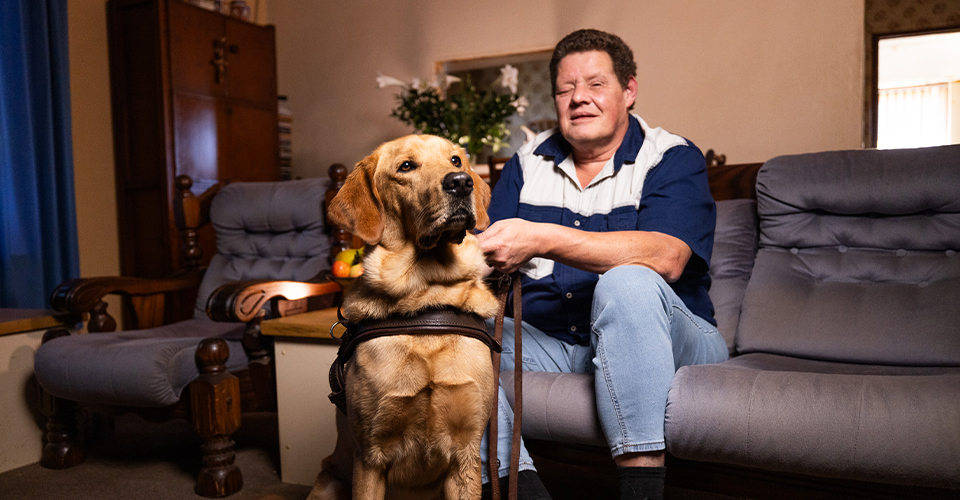
    Every great journey needs a co-pilot. For South African Air Force member Hentie, that co-pilot is Maverick, not the fighter-pilot from the movies, but a Labrador with steady paws, a steadfast heart, and a license to lead.

    For most of us, a dog is a companion. A source of comfort, joy, and the occasional muddy paw print. But for someone like Hentie, who is visually impaired, a guide dog is far more than that. These remarkable animals are partners in independence, confidence, and everyday safety. Today Hentie shares both his home and his working life with Maverick. But their partnership didn’t begin with a dramatic moment. Rather, it started with a quiet connection that began when Hentie’s wife spotted Maverick on a calendar photo, wearing sunglasses. Much like in the 1986 classic, Top Gun, Maverick the guide dog is a fluffy version of the fearless protagonist. “He has a big personality and a big heart,” Hentie says.

    Maverick isn’t just a pet. He isn’t just a helper dog. He is Hentie’s partner, his trusted navigator, his four-legged lieutenant with a mission of his own: to guide with dignity and keep his handler safe. As we explore the importance of dogs like Maverick, we’re also reminded of the care, support, and protection they need throughout their working lives. Big-hearted dogs like Maverick need wholehearted pet insurance to match!

    RELATED: HERO IN A HARNESS


    What Makes Guide Dogs So Important?

    If you’re sighted, you probably walk through a mall without thinking about it. You sidestep toddlers, avoid trolleys, and duck past those guys trying to spray-clean your sneakers. But for someone who’s visually impaired that mall might as well be a live obstacle course. That’s why guide dogs are so important. They give their handlers the freedom to move through the world with dignity, certainty, and trust.

    They help with:

    Obstacle Avoidance

    Such as cars, stairs, poles, or uneven ground.

    Pace Setting

    Smooth, steady walking. No sudden stops unless it’s necessary.

    Road Safety

    Stopping at curbs, checking for cars, preventing dangerous crossings.

    Spatial Awareness

    They “read” the environment like pros.

    Independence

    Guide dogs don’t just help people move, they help them live.

    Hentie describes it perfectly: “It’s like having a second pair of eyes that’s loyal, clever, and always on duty.”


    How Do Guide Dogs Know Where To Go?

    It’s a shared rhythm, built on trust. Each relies on the other: the human for direction, the dog for guidance.

    • The handler chooses the destination.
    • The dog chooses the safest way to get there.

    Guide dogs use a combination of training, memory, and instinct to guide their handlers through:

    • Repetition of familiar routes (helps them learn safe paths).
    • Recognising landmarks (allows them to orient themselves).
    • Sensing elevation changes (keeps their handler aware of steps, curbs, and slopes).
    • Avoiding obstacles and hazards (helps keep their partner secure).
    • And perhaps most impressively, they rely on something called intelligent disobedience.

    Intelligent Disobedience

    This is one of the defining skills of a trained guide dog and one of the reasons they are so extraordinary.

    If a handler gives a command that would lead them into danger, such as stepping into the road when a car is coming, the dog is trained to refuse the instruction. Instead, they pause, block, or redirect their handler to keep them safe. This skill isn’t defiance. It’s devotion. It’s the instinct and training that turns a guide dog into a true guardian and a partner that puts safety first, even when the world around them is unpredictable.


    Living And Working with a Guide Dog

    Today Maverick is Hentie’s co-pilot: steady, intuitive, and deeply attuned to his handler’s needs.

    Before they ever met, Hentie trained with his cane, learning the rhythm of moving through a world that doesn’t always bend easily for people with visual impairments. Maverick, long before joining the Air Force corridors as an honorary team member, was learning his own language: how to guide, how to pause, how to lead, how to protect. When they finally met, it was a match written in the stars.

    Living with a guide dog is not simply sharing a home with a pet, it’s sharing a life with a partner. According to Hentie, life with Maverick is a 24/7 partnership: Maverick wakes up ready, tail wagging and fully clocked in. At work, Maverick is basically a furry officer. Respected. Focused. And “Part of the crew,” as Hentie says. “He navigates corridors, busy buildings, and military environments with calm confidence.”


    How To Interact With a Working Guide Dog

    Hentie says what all handlers say: “Don’t distract the dog.”

    That means:

    • No petting.
    • No calling their name.
    • No whistling.
    • No making kissy sounds.
    • No “who’s a good boy”.

    If you ever see a guide dog alone, treat it as a red alert. These loyal-hearted dogs don’t leave their handlers unless something is truly wrong. Contact emergency services immediately, you could save a life.


    Does Every Blind Person Get A Guide Dog?

    The short answer is no. The long answer is that not everyone qualifies. A handler must:

    • have completed mobility training (like cane training)
    • have a lifestyle suited for a dog
    • pass a thorough assessment
    • be committed to ongoing care.

    Hentie, for example, trained at Optima College and became the first student referred to the Joburg branch of the SA Guide-Dogs Association.

    Not everyone wants one

    Some prefer canes. Some prefer human assistants. Some prefer independence without mobility aids. Guide dogs are amazing, but they’re not the only option.


    What Percentage Of Blind People Use A Guide Dog?

    Globally, it’s a small minority, usually around 2–5%. In South Africa, the percentage is even lower due to:

    • training costs
    • limited availability
    • geographic challenges
    • lifestyle compatibility
    • waiting lists.

    This is why supporting guide-dog organisations is so important. More funding equals more dogs, equals more independence for more people.


    Supporting The South African Guide-Dogs Association

    Raising a dog takes love, patience, and resources. Raising a dog to become a trusted mobility partner? That takes a village. The South African Guide-Dogs Association depends on your big-hearted generosity to:

    • Nurture and raise puppies with care
    • Train guide dogs to navigate the world safely
    • Assess and match dogs with their handlers
    • Place these incredible companions into loving homes
    • Provide lifelong aftercare
    • Support the bond between handler and dog every step of the way.

    Every contribution, whether financial or through volunteering, helps more Mavericks take flight. Every guide dog you help raise is a life touched, a heart lifted, and a world made a little brighter.

    RELATED: THE HEART-WARMING WORLD OF ASSISTANCE DOGS


    Big-hearted Heroes Deserve Wholehearted Pet Insurance

    It’s a role very few dogs have the temperament or intelligence to fulfil. Guide dogs help people return to work. They help people walk independently, feel safe, confident, and connected to the world again.

    To Hentie and so many South Africans, they are lifesavers. Because heroes don’t always fly jets. Sometimes, they walk on four paws, leading someone bravely through the world (giving back in their own way, what vision may have taken).

    That’s why we’re proud to support the SA Guide-Dogs Association and the warm-hearted trainers who raise dogs like Maverick for life-changing partnerships. At dotsure.co.za, we’re committed to providing pets, and their people, with Soft Landings. Heroes like Maverick are there to help people live fuller lives.  And our pet insurance is here to cover heroes such as Maverick, so that they can live full lives too.

    RELATED: THE IMPORTANCE OF PROFESSIONAL PUPS

  • LESS LITTERS, MORE LOVE: HOW DOTSURE.CO.ZA SUPPORTS PET STERILISATION DRIVES ACROSS SA

    LESS LITTERS, MORE LOVE: HOW DOTSURE.CO.ZA SUPPORTS PET STERILISATION DRIVES ACROSS SA


    At dotsure.co.za, we believe that protecting pets is about so much more than when an insurance policy kicks in. That’s why our mission is to support big-hearted vets and animal heroes across the country who protect and care for our pets, too.

    When it comes to loving pets, fur parents dot every “I” for sure. However, there’s one significant act of love that is often overlooked: pet sterilisation. It is something close to the heart of Elize Goosen, Branch Manager at the SPCA Garden Route Mossel Bay, and her dedicated team, who work tirelessly to end animal cruelty. We were proud to join forces with the SPCA in their mission to prevent cruelty and promote the welfare of all animals by sponsoring the sterilisation of 222 pets.


    Why Pet Sterilisation is Important

    Pet Sterilisation (aka spaying and neutering) isn’t just about preventing an uprising of puppies and kittens (like in The Planet of the Apes), it’s about preventing suffering. In many areas, shelters are bursting at the seams.

    According to Elize, “Pet overpopulation is a major concern. The Garden Route SPCA in Mossel Bay and George took in over 11,000 unwanted animals over the past year alone.” That’s 11,000 wagging tails looking for homes and far too few arms to hold them and pet parents to love them. But this figure only represents the animals that found help. Countless more are still roaming the streets, neglected, abandoned, or suffering in silence.

    Sterilisation is also a major health win. “Sterilised pets are less likely to roam, fight, or develop cancers of the reproductive system,” Elize explains.

    RELATED: DOES PET INSURANCE COVER STERILISATION?


    The Real Cost of Pet Sterilisation and Community Drives

    The average dog sterilisation cost in SA can range from R600 to R2 000, depending on the size and gender, and that’s before considering fuel, anaesthetic, or aftercare. For welfare groups without government funding, those costs adds up faster than you can say “good boy.”

    That is why sponsorships matter. dotsure.co.za’s support means groups such as the SPCA can focus on the doing instead of the fundraising. And that translates into healthier pets, safer streets, and communities with a little less heartbreak.


    Partnering with the Mossel Bay SPCA and Animal Clinics

    “The support we have received from dotsure.co.za made a massive impact on our work. Thanks to their generosity, we were able to sterilise 222 domestic animals without the financial strain it would normally place on our branch. This kind of support is truly life-changing. Without it, many of these animals might have contributed to the already overwhelming overpopulation crisis. Instead, they now have a healthier, more secure future.

    Ongoing support from companies such as dotsure.co.za allows us to plan ahead, set achievable sterilisation goals, and focus our energy on reducing the suffering of animals in our community.”

    Elize couldn’t have said it better. Her words capture exactly what lives in our hearts and drives us to provide Soft Landings for pets, vets, welfare organisations, and communities.


    Helping Communities Create Long-Term Change Through Pet Sterilisation Drives

    To us, wholehearted care means more than paying vet bills or sponsoring pet sterilisation drives. It’s about helping pets live healthier, safer lives and supporting our big-hearted vets, so they know they are not alone in this fight.

    As Elize put it so beautifully, “dotsure.co.za gave us more than funding, they gave us hope. The energy and renewed sense of purpose it brought to our staff, who deal with cruelty, neglect, and heartbreak daily, was truly uplifting. It reminded us of why we do what we do and that we’re not alone. From the bottom of our hearts, we thank dotsure.co.za.”

    RELATED: OUR COMMUNITY CAT STERILISATION PROGRAMME


    How You Can Help Create Soft Landings Too

    As the insurer who cares the most, we always aim to show up with care, compassion, and a bit of that spirit of ubuntu that says, “we’ve got you.” But we can’t do it alone.

    Here’s how you can join us to create Soft Landings:

    • Sterilise your pets. It’s the ultimate act of love.
    • Adopt a fur baby. Give a homeless pet a forever home.
    • Support your local SPCA. Donate, volunteer, or simply share their posts.
    • Insure your pet with dotsure.co.za. Every policy bought online helps support animal welfare causes, such as pet sterilisations.

    Visit dotsure.co.za to explore wholehearted pet insurance options or contact us anytime to learn more about how we’re creating Soft Landings across South Africa.

  • MR MIYAGEE: SOUTH AFRICA’S FOUR-LEGGED STAR OF SEMI-SOETER

    MR MIYAGEE: SOUTH AFRICA’S FOUR-LEGGED STAR OF SEMI-SOETER


    When people talk about unforgettable dog characters in movies, Mr Miyagee will soon top the list in South Africa. This charismatic pup with an oversized heart has become an experienced brand ambassador, a social media favourite, and a proud dotsure.co.za family member. Now, he’s comfortably donning the role of a film star with his big-screen debut in Semi-Soeter.

    A tiny canine star with big billboard energy.


    A Small Dog on the Big Screen

    “Watching him grow into one of South Africa’s best-known pet stars has been nothing short of extraordinary,” says Mr Miyagee’s mom, Lindi. “He’s an emotional support pet, animal rescue advocate, and brave fighter who inspires people daily.”

    His recovery journey has made him a symbol of strength. The public’s support, Lindi says, has been overwhelming: “It turned some of our toughest days into bearable ones. We never walked this path alone.”


    Casting the Dog Character of “Rolex”

    When the Semi-Soeter team searched for the right canine actor, it was love at first sight. “The moment we saw Mr Miyagee, we all knew. He was meant to be Rolex,” recalls producer, writer, and lead-acting co-star Anel Alexander. “Having him on set was amazing. He was professional, easy-going, and one of the best-behaved dogs I’ve ever seen in film.” Anel believes his performance will leave a lasting mark: “I think we’ll see an entire generation of dogs named Rolex, thanks to him.”

    Anel Alexander and Louw Venter with their four-legged co-star, Mr Miyagee.


    A Dog Actor with Serious Charisma

    Mr Miyagee himself (if you ask him) loved every moment. “Finally getting to bark in my own language was beyond cool,” he quips. “The cast treated me like family, with cuddles, snacks, and laughs all around. It was a proud moment to show that a small pup can shine on the big screen.”

    Of course, there were comedic moments, too. Like when his boundless energy nearly sent him flying into a pond mid-scene.

    Talented actors in their natural habitat.


    What’s Next for This Canine Star?

    As one of the most beloved doggy celebrities in South Africa, Mr Miyagee has his sights set high. “Hollywood? Definitely. Fast and Furry with Vin Diesel? I’m there. Why chase cats when you can chase the spotlight?”

    Whatever role comes next, one thing is certain: Mr Miyagee will continue to steal the spotlight and capture hearts.

  • WE LOVE VETS: FUNDING A CAT STERILISATION PROGRAMME

    WE LOVE VETS: FUNDING A CAT STERILISATION PROGRAMME


    In Kimberley, a small act of kindness has grown into a big-hearted initiative changing the lives of stray cats. Local actress Robyn Rossouw and her mom, Heloïse Rossouw, never expected their journey to begin with a few feral cats wandering onto their back stoep in 2021. What started with food bowls soon became a mission to care for, and sterilise, the neighbourhood’s cats. “We knew that if we could control the cat population, we’d give them a better chance at life,” says Robyn. 


    Since then, Robyn and her family, with the help of MediVet Kimberley, have sterilised dozens of cats, leading to happier colonies with fewer stray litters. Cats like Boolie and Mama Kiets (long-time escape artists) were finally sterilised after years of effort, marking a rewarding milestone for the team. 


    Recognising the importance of this work, we contributed to assist MediVet with sterilisation costs earlier this year, and we’re continuing to help sustain the programme until year-end. This commitment has inspired other local businesses to match the donations and extend the impact of this vital cause. 


    Dr Katharina van der Linde and Dr Greta du Preez from MediVet explain why these initiatives are so important: “Sterilisation prevents overpopulation and reduces the spread of diseases like FIV and feline leukemia. It also helps cats live healthier, less stressful lives. Thanks to the support from partners and local heroes, we can keep expanding this programme.” 

    Dr Katharina van der Linde and Dr Greta du Preez from MediVet Kimberley


    For Robyn and her family, the mission is as much about compassion as it is about population control. “Feeding strays is good, but ensuring long-term improvements in local cat colonies is even better. Helping just one cat can make a big difference.” 

    Sterilising stray cats is about so much more than population control. Female cats can avoid the strain of repeated pregnancies, while males are less likely to roam, fight, or spread diseases. It also makes life easier for communities. With fewer strays competing for food and territory, there is less risk of injuries or illness spreading between pets and ferals. That’s something everyone can feel good about! 


    Mittens (Tuxedo), Benji (Tabby) and Weasley (Ginger)


    Since we’re a pet-obsessed family here at dotsure.co.za, we believe in creating Soft Landings for animals and the people who care for them. It’s initiatives like this one in Kimberley, with the invaluable support of local vets, where kindness and community spirit truly make a difference.    


    Frequently Asked Questions:

    • What does “neutered” mean? It refers to the surgical procedure that prevents male cats from reproducing. 
    • What is spaying? Spaying is the sterilisation of female cats, preventing repeated pregnancies. 
    • When can a cat be sterilised? Vets recommend as early as possible, especially for strays, to reduce health risks.
    • What’s the cost of sterilising a cat? It varies depending on vet care, medication, and recovery needs, which is where contributions and community support are crucial. 


    Dotsure Limited (Registration number 2006/000723/06) is a licensed non-life insurer and authorised financial services provider (FSP39925). Voted South Africa’s Best Pet Insurance 2023/2024 by readers of The Star, Die Burger, Beeld, and City Press. 


  • HERO IN A HARNESS: WINSTON BEGINS HIS GUIDE-DOG JOURNEY

    HERO IN A HARNESS: WINSTON BEGINS HIS GUIDE-DOG JOURNEY


    At just under two years old, Winston, once a mischievous pup known for his cheeky bark and love of bucket-chasing, has officially graduated as a guide dog. Trained by the South African Guide-Dogs Association, Winston has been paired with Luwie, a seasoned handler who has welcomed him as a working partner, as well as family.


    Why Guide Dogs Are Important

    “I don’t see myself without a guide dog any longer,” says Luwie, who has been partnered with five guide dogs since 1994. “Since receiving Winston, I’ve been able to do everything myself again. He’s changed my daily routine completely. We bonded within a week, and now we’re just going strong.”


    How Are Guide Dogs Trained to Be So Obedient?

    Winston’s transformation didn’t happen overnight. Like many guide dogs in training, he began his journey bursting with energy and a strong personality, traits that initially made focus a challenge. “He was actually quite naughty in the beginning,” laughs Megan Reid, a trainer at the Guide-Dogs Association. “He was more interested in playing than working, and he’d steal anything he could find. But he’s incredibly food-motivated, and that helped us build trust and teach him the skills he needed.”

    The breakthrough moment came during a blindfolded test walk. Megan mistakenly believed they had reached a turning point in the route, but Winston refused to turn. “Despite my insistence, he held his ground. He knew the route better than I did. That was the moment I knew he was ready.”

    The warmhearted path of assistance dogs highlights the extraordinary dedication and training involved in matching the right dog with the right person. These partnerships restore independence and quality of life. As Luwie shares, “Winston is sociable, friendly, and incredibly helpful. He even keeps my wife company and occasionally steals her buckets!”


    Dedicated to Providing Soft Landings

    At dotsure.co.za, we’re proud to support this incredible and essential work, by helping to fund guide dog training and cover more than half of the Association’s monthly vet bills. It’s all part of our mission to provide Soft Landings, not just for pet parents but for overall animal welfare.

    The impact of professional pups like Winston ripples through families, communities, and hearts. And because all pets deserve protection, dotsure.co.za pet insurance also covers service dogs. Whether they’re chasing buckets or guiding the way, we’re here for them, wholeheartedly.