
Tag: drivers

  • WHEN WILL THE DEMERIT SYSTEM BE IMPLEMENTED IN SOUTH AFRICA?

    WHEN WILL THE DEMERIT SYSTEM BE IMPLEMENTED IN SOUTH AFRICA?


    South Africa’s demerit system (under the AARTO Act) has been in the works for years, due in part to pandemic delays and legal reviews. While earlier plans set triggers in 2020 and 2021, we now finally have clarity on what’s coming.

    Do you need clarity on your car insurance cover with dotsure.co.za? Log in to Manage Portal or contact us and we’ll help you out!


    What Is the AARTO Demerit System?

    The Administrative Adjudication of Road Traffic Offences (AARTO) Act introduces a demerit point system aimed at disciplining drivers via administrative penalties. This Act decriminalises many minor traffic infringements and shifts the burden off overcrowded courts.


    When Will the Demerit System Be Rolled Out?

    • December 1, 2025: AARTO’s digital infrastructure and fine-processing system will go live in the first 69 municipalities, which are major metros like Johannesburg, Cape Town, and Pretoria.
    • February 1, 2026: A further roll‑out to remaining municipalities.
    • September 1, 2026: The full demerit point portion officially kicks in. This means accumulating 15 points will lead to licence suspension, with subsequent suspensions possibly resulting in cancellation and the need to reapply.


    How Does the Demerit Point System Work?

    Every South African driver will start off with zero points on their driving licence, and for every infringement, they will gain points according to the severity of their offence.

    You could be fined anywhere between 1 point (for example, operating a vehicle with a damaged light) and up to 6 points (for example, failing to stop your vehicle for a traffic officer).

    The aim of the game is to keep your points as low as possible, because once you reach 15 points you will be disqualified from operating a vehicle for a specified amount of time.


    The Points Breakdown for Various Offences

    1 Demerit point

    • Driving an unregistered vehicle
    • Driving an unlicensed vehicle
    • Driving a vehicle with the licence plate not visible
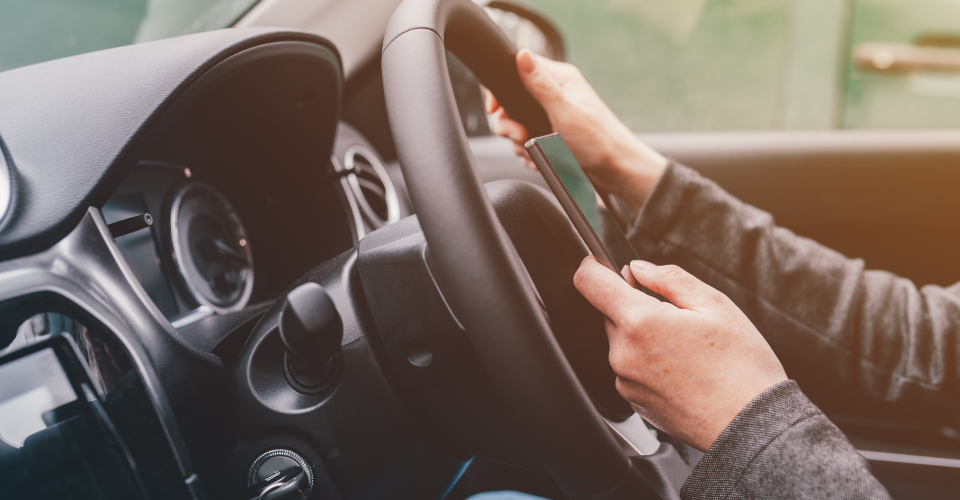
    • Driving while holding and using a cell phone
    • Skipping a stop sign (light vehicles)
    • Skipping a red light (light vehicles)
    • Failing to yield to a pedestrian
    • Overtaking across a barrier line (light vehicles)

    2 Demerit points

    • Skipping a stop sign (buses, trucks)
    • Skipping a red light (buses, trucks)
    • Overtaking across a barrier line (buses, trucks)
    • Driving 81-85 km/h in a 60 km/h zone
    • Driving 121-125 km/h in a 100 km/h zone
    • Driving 141-145 km/h in a 120 km/h zone

    3 Demerit points

    • Driving 106 -110 km/h in an 80 km/h zone

    4 Demerit points

    • Driving without a driving licence
    • Driving 131-135 km/h in a 100 km/h zone
    • 151-155 km/h in a 120 km/h zone

    5 Demerit points

    • Overloading a vehicle with max 56 000 kg combination mass by 12-13,99%

    6 Demerit points

    • Driving under the influence of an intoxicating substance
    • Driving 100 km/h+ in a 60 km/h zone
    • Driving 120 km/h+ in an 80 km/h zone
    • Driving 140 km/h+ in a 100 km/h zone
    • Driving 160 km/h+ in a 120 km/h zone


    What Happens If You Exceed the Points Limit?

    Your licence is suspended when you hit 15 demerit points, and every point beyond that adds another month of suspension. If you reach three suspensions, your licence will be revoked.


    How to Prepare for the Demerit System

    • Keep an eye on AARTO communications.
    • Maintain a clean driving record.
    • Pay or dispute fines within 32 days to reduce costs.
    • Follow road laws.
    • Track your demerit points as AARTO kicks in.

    The AARTO demerit system may feel overwhelming, but knowledge is power. Understanding when it will be implemented in South Africa helps you stay ahead.


    Do you need car insurance that works with your lifestyle? dotsure.co.za’s Name Your Price™ gives you flexible, affordable cover to protect your ride, whether AARTO is in full swing or not. Get your free quote today!

     

  • MEN VS. WOMEN DRIVERS: WHO’S BETTER?

    MEN VS. WOMEN DRIVERS: WHO’S BETTER?


    Discover How Car Insurance Can Make Anyone a Better Driver

    The debate over whether men or women are better drivers has been ongoing for years. Last year, we settled it: women are, in fact, the better drivers. Thanks to groundbreaking data analysis, compelling evidence debunks the myth. The study revealed that female drivers are involved in fewer accidents, practice safer driving habits, are better at parking (yes, even parallel parking) and thus have fewer insurance claims and lower premiums—go ladies!


    But what if the key to being a better driver lies in having car insurance? Instead of debating who’s better, let’s explore how car insurance influences our driving habits and helps all genders become better drivers.


    The Role of Car Insurance

    Peace of Mind for All Drivers

    Having car insurance provides financial protection, reducing stress and anxiety when it comes to the unexpected. This peace of mind allows drivers to focus more on the road and less on the daunting financial burdens of potential accidents. An insured driver is a calmer one.


    Financial Incentives to Drive Safely

    At dotsure.co.za, we reward safe driving behaviours with our Smart Driver App. By incentivizing better driving, we’re creating a community of fans who want to drive responsibly and maintain their smart driving rating because they’re rewarded for it.


    Monitoring and Accountability

    One word: Telematics. To monitor a car’s driving patterns, we use a telematics device known as the dotsure.co.za Smart-Box. This provides drivers with real-time feedback and monitors things like movement, location, and behaviour. So, if you’re slamming the brakes or accelerating like an F1 driver, you won’t be rewarded.


    Conclusion: The Best Drivers Are Insured Drivers

    The true measure of a good driver is not about gender but about the practices and behaviours that contribute to making our South African roads safer for all.


    dotsure.co.za, encourages safer driving. So, whether you’re male or female, we say the first step to becoming a better driver starts with car insurance.

  • DANGEROUS DRIVERS: SA STATISTICS

    DANGEROUS DRIVERS: SA STATISTICS


    Safety Risks for Road Users

    South Africa has a reputation for being one of the most dangerous places to drive, and recent studies back this up with some alarming statistics. With the highest number of fatal road accidents among 20 surveyed countries, our roads are some of the deadliest in the world.


    The Numbers Don’t Lie

    South Africa experiences 44,8 fatal accidents per 100,000 people. To put this into perspective, this rate is worse than in countries known for their chaotic traffic and poor road conditions, such as India, Brazil, Colombia, and Peru.


    What’s Causing the Chaos?

    • Reckless Driving:

    Speeding, aggressive driving, and ignoring traffic laws are common.

    • Drunk Driving:

    Driving under the influence of alcohol or drugs is a significant problem.

    • Poor Vehicle Maintenance:

    Many cars on the road are not properly maintained, which leads to accidents.

    • Corruption and Inefficiency:

    Bribes to avoid fines and illegitimate licences allow unqualified drivers to get behind the wheel.


    Driver Behaviour

    Out of over 4 million trips monitored, 28% of South African drivers indicated at least one bad driving habit such as harsh braking, harsh acceleration, speeding, and sharp cornering. Notably, acceleration and speeding accounted for 21% of the incidents. These dangerous habits contribute to over 12,500 road deaths, annually.

    A study revealed that South African youth exhibit more risky driving behaviours compared to their global counterparts. Many admit that they would fail their driving tests if they were retaken. Additionally, young drivers in South Africa aren’t well-prepared for challenging conditions such as heavy rain or night driving.


    The Road Ahead

    Driving in South Africa can be risky, but with the collective efforts of traffic law enforcement and responsible drivers, it’s possible to make the roads safer for everyone.