
– 6 minutes
Table of contents
There’s nothing quite like kitten curiosity. One minute, your tiny fluffball is chasing a dust particle across the lounge, and the next, they’re staring out the window, wondering what lies beyond the garden wall.
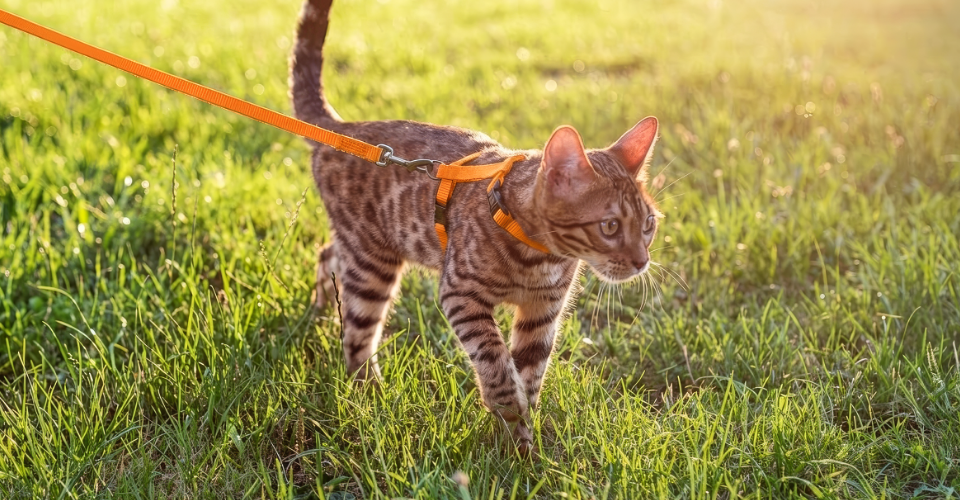
For Kitten Day, why not celebrate your cat’s curious nature by helping them safely discover the world around them? Learning how to leash train a kitten can open up a whole new world of enrichment, confidence and bonding. From exploring the garden to travelling together or enjoying a beach day, these little adventures can become some of your favourite memories.
Of course, every adventure comes with new environments, unfamiliar smells and curious encounters, which means there’s always a chance of unexpected accidents or illnesses. That’s why the ultimate winning combination is giving your kitten the confidence to explore and having the right kitten insurance in place to help protect them along the journey.
While wholehearted pet insurance helps to protect your kitten when unexpected moments happen, leash training helps you create more opportunities to create new memories together. With patience, positive reinforcement and plenty of encouragement, you can help your cat explore at their own pace while building trust along the way.
Can a Kitten be Trained to Walk on a Leash?
Yes, a kitten can be trained to walk on a leash, but it takes patience, positive reinforcement, and the right approach. Cats are naturally curious animals, which means many kittens enjoy discovering new sights, smells, and sounds. However, they also like feeling in control of their environment. A harness and leash are completely new experiences, so your kitten needs time to adjust. Here are a few things to note:
Kittens Often Learn Faster Than Adult Cats
Starting young can make the process of leash training easier because kittens are generally more adaptable. They are still learning about the world around them, which means new experiences can become normal parts of their routine. That doesn’t mean older cats can’t learn. Some adult cats happily become adventure companions too. It simply means they may need a little extra patience and more time to build confidence. You can begin introducing your kitten to a harness once they are comfortable in their home environment and have had time to settle into their routine. Before heading outdoors, it’s important that your kitten has received appropriate vaccinations and is ready to safely experience the outside world.
Some Kittens are More Receptive to Training than Others
Every kitten has its own personality. Some cats are natural explorers who will happily investigate anything new. Others may need encouragement before stepping outside their comfort zone. A confident kitten who enjoys play, treats, and interaction may take to leash training quickly. A more cautious cat might prefer shorter sessions and plenty of reassurance. The goal isn’t to force your kitten into becoming an outdoor explorer; it’s to help them feel safe enough to choose adventure.
What Gear is Needed to Leash Train a Kitten?
The right equipment makes all the difference when leash training a kitten. A cat harness and leash are designed specifically for feline bodies and behaviour.
Choosing the Right Cat Harness and Leash
Use:
✅ A well-fitted cat harness
✅ A lightweight nylon or cloth leash.
Avoid:
❌ Small dog harnesses
❌ Chain leashes
❌ Heavy or retractable-style leads.
Cats are flexible and surprisingly talented escape artists. A properly fitted harness should be secure without restricting movement. You should be able to fit around one or two fingers comfortably between the harness and your kitten. You can find suitable equipment, such as a cat harness and leash, through pet retailers like ePetStore.
Steps to Leash Training a Kitten
| Step 1: Purchase the proper equipment | A special cat harness is the first item to purchase, along with a cat leash. Make sure the fit of the harness is right. |
| Step 2: Introduce the harness indoors | Start by letting your kitten investigate the harness. Allow them to sniff it before putting it on. Try to fit one or two fingers between the harness and your cat. This amount of space allows for the harness to fit snugly without being too tight. Once it’s fitted, reward them with a treat. Only give treats while the harness is on, so your kitten starts thinking: “Harness on = good things happen.” Keep early sessions short and positive. |
| Step 3: Add the leash without pressure | Little by little, increase the time your cat wears the harness. Once your kitten is comfortable wearing the harness, attach the leash indoors. Let your kitten walk around while you follow behind with the leash loose. The goal is not to lead your kitten immediately. The goal is to help them understand that the leash is not scary. Carefully observe signs to see whether your cat likes or dislikes the harness. If they seem agitated, give them a treat and remove the harness. |
| Step 4: Get comfortable with leash movement | Allow your kitten to experience gentle leash movement while supervised. Never leave your kitten wearing a harness or leash unattended. Safety first, even the most confident cats can get themselves into unexpected situations. Some cats will want to play with the leash or get scared of it if dragged behind them, so adjust as needed. |
| Step 5: Practise walking indoors | Follow your kitten’s lead around the house. Use treats and praise to encourage movement. If they walk towards you, explore a new area, or calmly respond to the leash, reward that behaviour. |
| Step 6: Head outdoors | When your kitten is comfortable indoors, it’s time for their first outdoor adventure. Choose a quiet, dry day. Open the door and let your kitten decide whether it wants to step outside. Never force them. A few calm minutes outside is a successful first outing. Remember: your cat is not failing if they stop every five seconds to inspect leaves. That’s basically the cat version of sightseeing. |
The Benefits of Leash Training a Kitten
Leash training can offer more than just cute Instagram moments. For indoor cats, especially, outdoor exploration can provide mental stimulation, exercise, and confidence.
New experiences help kittens learn that unfamiliar sounds, smells, and environments are not always scary. A confident cat is often better equipped to handle changes and new situations. Exploration, play, and problem-solving help keep their minds active.
Safety Considerations Before Going Outdoors
Before exploring:
- Ensure vaccinations are up to date
- Avoid busy roads
- Avoid areas with uncontrolled dogs
- Keep your kitten supervised
- Start slowly.
Start small. The garden, patio, or quiet area outside your home can be enough excitement for their first adventure. The outside world is full of new smells, sounds, and sights. Don’t force it. Take a break and try again slowly with treats and positive reinforcement. Some kittens need days or even weeks before they feel comfortable.
Travelling and Exploring with Your Kitten
A leash-trained kitten may also find travelling easier because they become familiar with new environments gradually. Whether you’re visiting family, enjoying a pet-friendly holiday, or letting your cat experience the beach for the first time, preparation is key.
Always bring:
- Water
- Treats
- A familiar blanket
- Their carrier
- Their harness and leash.
And because adventures don’t always go according to plan, having the right protection matters too. From curious kittens who find trouble under every cupboard to unexpected vet visits, our affordable kitten insurance can help you prepare for the moments you don’t see coming. Get an instant quote onlineand choose cover that helps to give you peace of mind for your furry explorer. Your kitten may not become the next mountain-climbing cat influencer overnight, but with patience, the right training, and wholehearted care, you can help them safely discover a bigger world. Visit dotsure.co.za to explore pet insurance options designed for your cat’s needs. Already enjoying SA’s #1 pet insurance? Make a claim or adjust your policy on our Manage Portal.