
– 12 minutes
Table of contents
- What Are South African Road Rules?
- Road Rules Every South African Driver Should Know
- Driver Documents and Vehicle Identification
- Number Plate Rules in South Africa
- Traffic Fines and Demerit Points
- Roadworthy Vehicles and Legal Responsibilities
- Your Rights During Traffic Stops
- Safe Driving Beyond South African Road Rules
- Frequently Asked Questions About South African Road Rules
- What Are the Most Important Road Rules in South Africa?
- What Documents Must You Carry While Driving?
- Can You Be Fined for Driving an Unroadworthy Vehicle?
- What Happens If You Ignore Dashboard Warning Lights?
- What Is the Demerit System?
- Can You Legally Drive with a Picture of Your Licence?
- Are Personalised Number Plates Legal in South Africa?
- Good Drivers Protect More Than Their Licences
Understanding South African road rules isn’t just about avoiding penalties. It’s about protecting yourself, your passengers and your vehicle. From incorrectly using traffic circles to driving with illegal number plates or ignoring dashboard warning lights, small mistakes can lead to hefty fines, accidents or even costly mechanical damage.
This comprehensive guide breaks down essential South African road rules, clarifies vehicle roadworthiness, and highlights how everyday driving habits can either protect or void your car’s mechanical warranty.
What Are South African Road Rules?
South African road rules are the legally enforceable regulations set out in the National Road Traffic Act (NRTA) that govern how motorists use the country’s roads safely. They cover everything from speed limits and right-of-way at intersections to seatbelt requirements, overtaking, yielding, and pedestrians.
These rules create a consistent standard for all road users, helping to reduce accidents and keep traffic flowing across South Africa. Common examples include keeping left and overtaking on the right, giving way to cars on your right at roundabouts, and following posted speed limits on our roads.
Drivers often confuse road rules, such as keeping left and passing right, with strict traffic laws, such as driving an unregistered vehicle, which can result in criminal prosecution, heavy traffic fines, or even the immediate voiding of your car insurance policy.
Road Rules Every South African Driver Should Know
The Most Common South African Road Rules Drivers Get Wrong
The road rules most frequently broken include failing to stop completely at a four-way stop, driving with an expired vehicle licence, and lane splitting (when a motorcycle rider passes between two parallel lanes of slow-moving or stationary vehicles going in the same direction). Let’s brush up your knowledge:
Intersections and Right of Way
Understanding who has the right of way can prevent confusion and collisions.
- Four-way stops: The first vehicle to arrive has the right of way. If two vehicles arrive simultaneously, give way to the vehicle on your right.
- Roundabouts (traffic circles): Always give way to traffic already in the circle and approaching from your right before entering.
- Traffic lights (“robots”): A green light doesn’t automatically give you priority when turning right. Unless there’s a dedicated green turning arrow, you must yield to oncoming traffic before completing your turn.
Speed Limits
South Africa’s default speed limits are:
- 60 km/h in urban areas
- 100 km/h on rural and regional roads
- 120 km/h on freeways
Always obey the posted speed limit, as road signs take precedence over the national defaults.
Overtaking and Lane Discipline
- Keep left and overtake on the right whenever possible.
- Slower-moving vehicles should move into the left lane to allow faster traffic to pass safely.
- The yellow shoulder should only be used in emergencies or, where it is safe and legal to do so, to allow faster vehicles to pass.
Seatbelts and Child Safety
Seatbelts are compulsory for every occupant in the vehicle. Children under the age of three must travel in a suitable child restraint that matches their age, height and weight.
Pedestrian Safety
The safety of pedestrians is one of the major concerns for the transport and traffic authorities in South Africa. Drivers must always give way to pedestrians at designated crossings.
Driver Documents and Vehicle Identification
Before you even turn the key, there are a few legal requirements every driver should meet.
Driver’s Licence Requirements in South Africa
People often ask whether they can drive around with a picture of their licence. The answer is no. Under South African traffic laws, you must carry your original, physical, valid driver’s licence card whenever you operate a motor vehicle.
Traffic law enforcement requires immediate verification of your legal authorisation to operate a specific vehicle class to keep unlicensed or suspended drivers off the road.
At present, a photograph is not generally considered a substitute for your physical licence card, although South Africa is currently in the process of introducing digital driver’s licences.
Number Plate Rules in South Africa
Are personalised number plates legal?
Yes, provided they are officially registered through your provincial department of transport and comply with regulations regarding size, visibility and formatting. Vehicles must be easily identifiable by law enforcement and automated traffic camera systems to track traffic violations and stolen property.
If your number plate is faded, cracked, obscured by a towbar, or features illegal custom lettering, your vehicle is technically unroadworthy and subject to immediate traffic fines. Avoid expensive legal penalties by reading is my number plate illegal?, brushing up on 8 facts about number plates, and learning how to name your number plate without going broke.
Traffic Fines and Demerit Points
Understanding Traffic Fines
Traffic fines are issued under two systems: the Criminal Procedure Act (Section 56 notices) and the Administrative Adjudication of Road Traffic Offences (AARTO) Act.
Theyact as a legal penalty to discourage dangerous driving habits and ensure drivers stay accountable.
Ignoring outstanding traffic fines can lead to warrants of arrest, being blocked from renewing your vehicle licence disc, or legal issues during routine traffic stops.
Here are the most common traffic fines:
- Speeding: exceeding the speed limit is one of the most common traffic offences and can result in hefty fines or legal penalties.
- Illegal parking: parking in restricted areas, blocking driveways, or ignoring road signs can lead to fines or your vehicle being towed.
- Using a cellphone while driving: Holding or using a mobile phone while driving distracts your attention and is illegal in South Africa.
- Driving an unroadworthy vehicle: vehicles with faulty brakes, worn tyres, broken lights, or other safety defects can attract fines and be declared unroadworthy.
- Licence-related offences: driving without a valid licence, failing to renew your licence, or not carrying it when required can result in fines and further legal consequences.
How the Demerit System Will Work
Here is how the demerit system will work:
- Clean start: Every South African driver will start off with zero points on their driving licence, and for every infringement, they will gain points according to the severity of their offence.
- Points System: You could be fined anywhere between 1 point (for example, operating a vehicle with a damaged light) and up to 6 points (for example, failing to stop your vehicle for a traffic officer).
- Red zone: Once you reach 15 points your driver’s license will be suspended for 3 months for every point that exceeds the 15-point threshold. (For example, reaching 16 points results in a 3-month suspension, 17 points in a 6-month suspension, and so on).
- U-turn: Your total points balance will go down by 1 point for every 3-month period you drive without incurring any new demerit points.
Common Driving Habits That Can Lead to Fines
If traffic officers catch you doing one of these bad habits, it could lead to a fine:
- Texting while driving: Taking your eyes off the road for even a few seconds dramatically increases your risk of causing an accident.
- Speeding: driving above the speed limit reduces your reaction time and often makes crashes more severe.
- Rolling through stop signs: Failing to come to a complete stop puts you and other road users at risk, especially at intersections.
- Not wearing a seatbelt: Seatbelts significantly reduce the risk of serious injury or death in the event of a collision.
- Ignoring lane markings: Drifting across lanes or disregarding road markings can increase the likelihood of collisions with other vehicles.
- Unsafe overtaking: overtaking without enough visibility or space can result in dangerous head-on collisions or a loss of control.
Beyond fines, many of these habits also place additional stress on your vehicle through harsh braking, sudden acceleration and unnecessary wear.
Roadworthy Vehicles and Legal Responsibilities
Being a safe driver also means driving a safe vehicle.
What Makes a Vehicle Roadworthy?
A vehicle is legally roadworthy when its steering, brakes, suspension, tyres, glass, and lights all comply with the safety standards set by the National Road Traffic Act. Routine wear and tear degrades car parts over time, increasing the risk of mechanical breakdowns or accidents on public roads.
If key components such as your brake pads or tread depth fall below the minimum legal limits, your vehicle fails roadworthy requirements, leaving you open to heavy fines and insurance claim rejections. Audit your vehicle’s condition using our comprehensive guide on how to check your car’s roadworthiness.
Signs That Your Vehicle May Not Be Roadworthy
Visible defects such as smooth tyres, broken windscreens, exhaust smoke, or faulty indicators can result in a traffic fine or your vehicle being taken off the road for not being roadworthy.
Defective vehicle components reduce your ability to steer, stop, or signal properly, compromising safety for everyone on the road. Operating a car with clear mechanical issues can leave you stranded, or worse. Learn to spot structural weaknesses by tracking these 8 signs that your car is not roadworthy.
Dashboard Warning Lights You Should Never Ignore
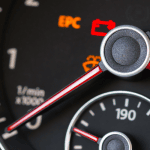
Ignoring critical dashboard warning lights, such as the oil pressure or engine temperature warnings, can cause sudden, catastrophic mechanical failure.
Continuing to drive with an illuminated dashboard light will void your mechanical warranty due to operator negligence, leaving you responsible for expensive engine replacement costs.
Vehicle Safety Checks Every Driver Should Perform
Perform a five-minute pre-drive inspection of your tyre pressure, engine oil level, coolant reservoir, and all exterior lights. A simple car safety checklist can help you spot fluid leaks and worn parts early, keeping you safer on the road while preventing minor issues from becoming major breakdowns.
A car safety checklist walks you through the simple inspections every driver should perform before setting off. From tyres and lights to fluid levels and wiper blades, these quick checks can help prevent unexpected breakdowns and improve your safety on the road.
Overlooking small vehicle faults can do more than compromise your safety. They could also result in traffic fines. Proactive measures such as renewing your license disc and keeping your vehicle working parts in a roadworthy condition can help you avoidunnecessary fines.
If you’re planning a getaway, consider ticking off the road safety checklist for holiday travels – which covers everything from servicing and emergency supplies to route planning, so you can travel with greater confidence and peace of mind.
Your Rights During Traffic Stops
What Traffic Officers Can and Cannot Do
If you’re stopped by a traffic officer or at a roadblock, you have rights as well as responsibilities. You can ask the officer to show their official identification. You may also ask for proof that the roadblock has been authorised.
You cannot be forced to pay a traffic fine on the spot, and an officer cannot arrest you for an unpaid fine unless there is a valid warrant of arrest. In most cases, officers also need your permission, a warrant, or reasonable grounds to search you or your vehicle. You’re also allowed to record the interaction on your phone, as long as you don’t interfere with the officer’s duties.
Knowing your rights can help you to stay calm, cooperate with law enforcement, and ensure you’re treated fairly.
Safe Driving Beyond South African Road Rules
Following the law is only part of becoming a safer driver.
How Mechanical Problems Can Increase Your Risk
Mechanical failures don’t just damage vehicles, they contribute to accidents. Brake problems, worn tyres, steering faults and suspension issues can all reduce your ability to avoid danger. Sudden failures in components such as worn shock absorbers or old brake pads can significantly increase your stopping distance and cause a loss of control.
Protect your vehicle’s handling by learning more about mechanical issues and car crashes.
Driving Habits That Can Cost You Money
Bad driving habits that damage cars including resting your foot on the clutch pedal (clutch riding), aggressive braking, accelerating hard before the engine has warmed up, and shifting into reverse while the vehicle is still moving all cause premature mechanical wear. These actions create excessive friction and heat in components such as the clutch plate, transmission gears, and brake pads, causing them to wear out much faster than they should.
Battery-related mistakes can be just as costly. Leaving lights or accessories on, ignoring the warning signs of a weak battery, or skipping routine battery checks can leave you stranded without warning. And if your battery dies, remember that you cannot push start an automatic car. Unlike a manual transmission, an automatic relies on the battery to power essential systems needed to engage the transmission and start the engine, making jump-starting the safest and most effective solution.
How Do I Prepare My Car for a Long Trip?
To prepare your car for a long journey, you should match tyre pressure to your passenger load, verify that your spare is inflated, check fluid levels, and replace worn windscreen wipers before heavy seasonal rains.
Long highway drives and extreme weather place extra stress on your engine, cooling system, and tyres compared to short daily commutes. Driving in heavy rain with worn wipers or smooth tyres can lead to a layer of water building up between your car’s tyres and the road surface (aquaplaning), causing you to lose traction and steering control completely. These are just some of the winter driving hazards you’ll want to avoid.
Practical Road Safety Tips for Women Drivers
For women driving in South Africa, safety often involves unwritten road rules, such as keeping valuables out of sight to prevent smash-and-grab incidents and keeping your doors locked at all times.
If your vehicle breaks down in an isolated or poorly lit area due to a skipped service, you face safety risks alongside expensive towing fees and out-of-pocket repair costs if your warranty is voided.
Frequently Asked Questions About South African Road Rules
What Are the Most Important Road Rules in South Africa?
The most important road rules in SA include driving on the left side of the road, overtaking only on the right, obeying all posted speed limits, stopping fully at stop signs, and always yielding to the right at roundabouts.
What Documents Must You Carry While Driving?
You must carry your original, valid physical driver’s licence card. If you are operating a commercial or public transport vehicle, you must also display the appropriate professional driving permit (PrDP).
Can You Be Fined for Driving an Unroadworthy Vehicle?
Yes. Law enforcement officers can issue fines for vehicle defects or issue a notice to discontinue use, which legally removes the unroadworthy car from public roads.
What Happens If You Ignore Dashboard Warning Lights?
Ignoring warning lights can cause severe mechanical failure, like a seized engine or broken transmission. It also allows warranty providers to deny claims based on negligence.
What Is the Demerit System?
The AARTO demerit system links point deductions directly to a driver’s licence for traffic violations. If a driver accumulates too many penalty points, their licence will be suspended or permanently revoked.
Can You Legally Drive with a Picture of Your Licence?
No. The National Road Traffic Act requires you to present your original physical driver’s licence card during any traffic stop. Digital photos, screen captures, or photocopies are not legally accepted.
Are Personalised Number Plates Legal in South Africa?
Yes, personalised number plates are legal, as long as they comply with your province’s legal requirements for design, visibility and registration.
Good Drivers Protect More Than Their Licences
Understanding South African road rules is about more than passing your driver’s test or avoiding traffic fines. Every safe decision you make, whether it’s using a traffic circle correctly, keeping your vehicle roadworthy or staying on top of routine maintenance, helps to protect you, your passengers and your vehicle.
Looking after your car also means looking beyond the rules of the road. Regular servicing and preventative maintenance can reduce the likelihood of unexpected mechanical failures and help extend the life of important components. Pairing responsible vehicle ownership with the right extended car warranty gives you added confidence when the unexpected happens.
At Dotsure, we believe safer driving starts with better knowledge, smarter maintenance and cover that helps you stay on the road for longer. Get in touch today to learn more.