
– 5 minutes
Behind every confident guide dog is a journey filled with care, dedication, and community support. At dotsure.co.za, we’re proud to play a small part in that journey by supporting the incredible work of the South African Guide-Dogs Association, helping future guide dogs get the training, care, and opportunities they need to change lives.
What is guide dog puppy training?
Guide puppy training is the process of preparing a dog to safely lead and support a visually impaired person. But this isn’t your average “sit, stay, fetch” playbook.
A guide dog is:
- A navigator
- A decision-maker
- A safety partner
They’re trained to think, assess, and sometimes even disobey commands if it means keeping their human safe. This is called intelligent disobedience and it’s what separates a good dog from a life-changing one.
RELATED: WHY GUIDE DOGS ARE IMPORTANT
The journey from puppy to guide dog
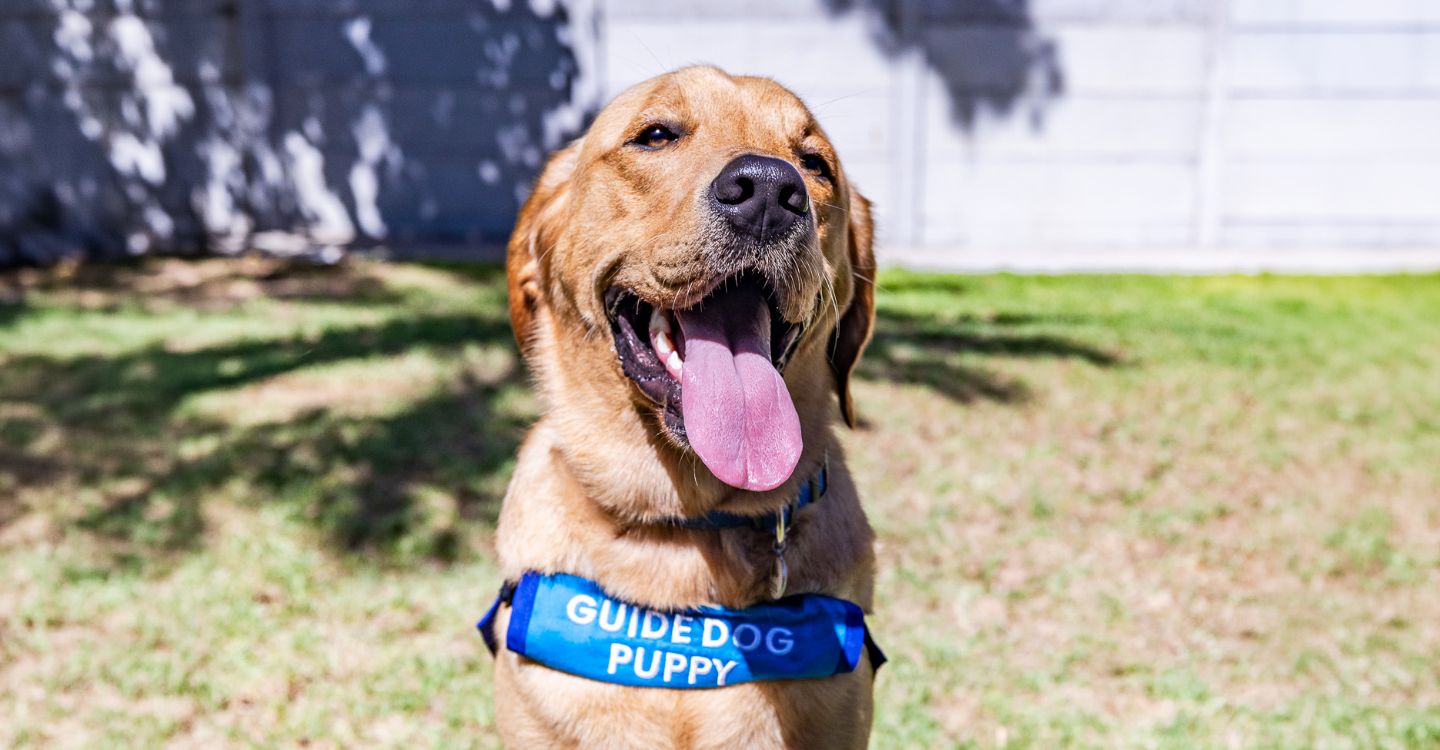
Every champion starts as a rookie. Before the harness, before the calm confidence, before the life-changing partnership, every guide dog begins their journey as a wobbly, curious pup learning the ropes and just trying to figure out the world. Welcome to the puppy premier league, where guide puppy training is less about quick wins and more about a full season of growth, discipline, and heart. Because here, the goal isn’t just obedience. It’s independence for someone who needs it most.
Pre-season: puppy raising and socialisation
Before any big matches, there’s pre-season training. For the first 12–14 months, puppies are placed with volunteer raisers, everyday heroes who lay the foundation for greatness. Here’s what the rookies learn:
- Walking on different surfaces
- Staying calm in busy environments
- Ignoring distractions like taxis, trolleys, and crowds
- Confidence in unfamiliar spaces
It’s not about perfection, it’s about exposure, patience, and building trust.
Training here is rooted in:
| Training Method | How It Works | What It Looks Like in Practice | Why It Matters |
| Positive Reinforcement (+R) | Rewarding desired behaviour to encourage more of it | Good behaviour = click + treat (or praise) | Builds confidence, trust, and a willingness to learn |
| Negative Punishment (–P) | Removing a reward to discourage unwanted behaviour | Unwanted behaviour = reward is withheld or removed | Teaches boundaries without fear or intimidation |
Training camp: formal training with professionals
At around 14 months, the real league begins. Professional trainers step in to refine skills and build advanced abilities:
- Navigating obstacles
- Stopping at curbs
- Finding doors and crossings
- Moving safely through crowded environments
This is where instinct meets discipline. And then comes the defining skills. Training moves beyond the backyard and into the real world.
Puppies learn to:
- Ignore distractions (taxis, crowds, noise)
- Walk calmly through shops
- Focus under pressure
This is where the Three D’s come into play:
- Duration – how long they can hold a behaviour
- Distance – how far they can perform it from the handler
- Distraction – how well they cope with real-world chaos
The MVP move: Intelligent Disobedience
Imagine giving a command to move forward, but there’s danger ahead. A guide dog will stop. Refuse. Hold their ground. That’s intelligent disobedience. The ultimate match-winning move. It’s courage. It’s awareness. Over time, behaviours become reliable. Predictable. Automatic. That’s when a dog moves from learning to mastering.
Matching a guide dog with a partner
After roughly two years of training, it’s time for the final whistle.
Each dog is carefully matched with a visually impaired partner based on:
- Lifestyle
- Walking pace
- Personality
This isn’t just a pairing, it’s a partnership. From that moment on, every step they take together is a shared victory.
Guide dogs don’t just assist, they unlock independence.
They help their handlers:
- Navigate safely
- Move confidently through public spaces
- Reclaim freedom and dignity
It’s not just mobility, it’s empowerment. Because sometimes, the difference between staying home and stepping out… is a dog who’s been trained to lead.
The role of The SA Guide Dogs Association For The Blind
The SA Guide-Dogs Association for the Blind is the backbone of this life-changing work. They:
- Breed and raise guide dogs
- Train them to professional level
- Match them with recipients
- Provide ongoing support
And here’s the reality: they receive no government funding. Everything they do is powered by donations, sponsorships, and people who believe in access for all. In South Africa, access to mobility and independence isn’t guaranteed.
For many visually impaired individuals, a guide dog can mean:
- The ability to work
- The confidence to travel
- The freedom to live independently
But training one guide dog can cost between R100 000 and R500 000.
And yet, recipients pay only R205 per month. That gap? It’s filled by people like you and the generous donations we make.
Our commitment to sponsoring a guide puppy
At dotsure.co.za, we believe in backing potential from day one. That’s why we proudly support guide puppy training, helping fund the journey from playful pup to life-changing partner. Because behind every trained guide dog… is a team that made it possible.
You might not be raising a guide puppy, but you’re still part of the team. Every dotsure.co.za pet insurance policy contributes to supporting initiatives like the SA Guide-Dogs Association. So while you’re protecting your own pet… you’re helping another change someone’s life. From rookie to MVP, the journey of a guide dog is one of patience, purpose, and partnership. And the best part? You’re already on the team.