
– 5 minutes
Our country’s natural heritage is written across its landscapes, from our mountains and beaches to the birds soaring above them. Protecting that heritage takes more than conservation areas and legislation. It also takes people willing to step in when an animal is injured, often quietly, often without recognition, and always with an enormous amount of heart.
We’re celebrating one of those people, Dr Christiaan Blignaut of George Animal Hospital, whose passion for wildlife has seen him become an important helping hand for conservation authorities and members of the public who encounter animals in need.
A Vet’s Calling to Care
Dr Blignaut’s interest in wildlife started long before he picked up a stethoscope.
“I always loved nature and spent much of my time as a child outdoors,” he says. “Hiking, climbing, camping, travelling. I was also born in Malawi and travelled in Africa a lot, so wildlife was a passion since a young age.”
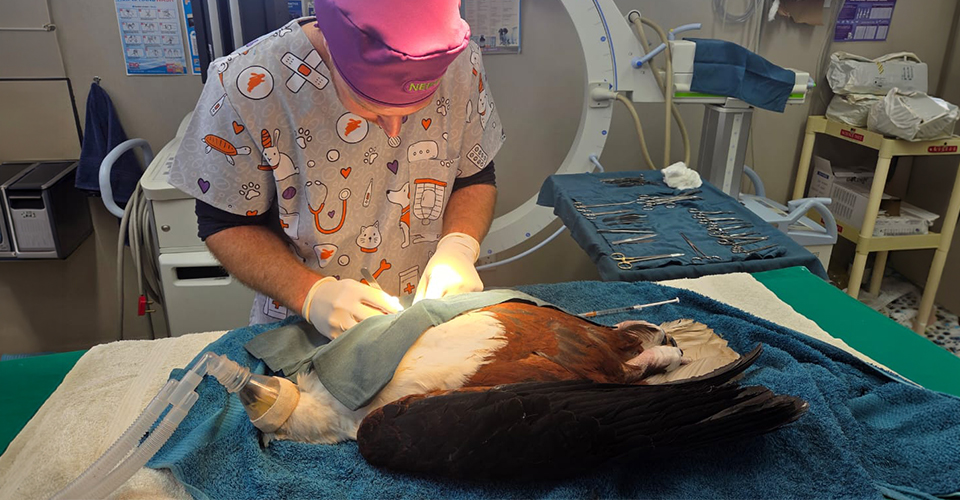
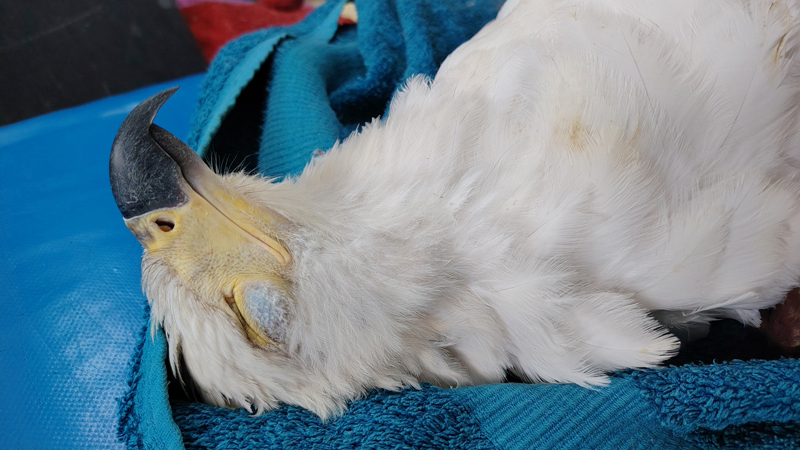
It is that passion that recently brought an unusual patient through his doors. A female African Fish Eagle that had been living in captivity at a rehabilitation centre.
The eagle had previously undergone an amputation of her injured wing, but the area had not healed properly. Dr Blignaut needed to perform a second amputation, this time closer to the body, allowing him to properly close and heal the wound.
Two weeks later, the wound had healed and the stitches could be removed.
For this particular eagle, returning to the wild was unfortunately not an option. She had already spent a long time in captivity and had a mate at the rehabilitation centre. Rather than simply viewing her circumstances as the end of the road, Dr Blignaut chose to give her a chance at a comfortable life alongside her companion.
The Heart Behind the Work
Wildlife veterinary care requires specialised knowledge and equipment, but according to Dr Blignaut, much of the work comes down to being willing to help.
He assists rehabilitation centres and members of the public with wildlife rescue cases, often within the realities of private practice where funding can be limited.
It is a side of veterinary medicine that the public may not always see. Vets can play a role in conservation, wildlife health, education, legislation and governance, as well as the treatment of individual animals.
There’s a fitting connection close to home, too. Dotsure may be known locally as the proud sponsor of the Dotsure SWD Eagles rugby team in George, but its support for eagles extends beyond the rugby field. After learning about the African Fish Eagle’s case, Dotsure donated R5,000 towards Dr Blignaut’s wildlife work. As the eagle’s surgery had already been covered by the nature fund supporting her care, the donation will be put towards similar wildlife cases in the future.
For us, it is a small way of saying thank you to the vets who give so much of themselves to animals, whether those patients have a collar, feathers, scales, or none of the above.
Protecting Our Wildlife Heritage
Our wildlife is part of what makes South Africa home. The African Fish Eagle is one of the birds that has become synonymous with our waterways and wild spaces, but protecting our biodiversity means looking beyond individual species.
Habitat destruction and poaching remain significant threats to animals, while the people working on the ground face the challenge of not having enough resources to respond.
This Heritage Month, we’re asking our community to look beyond the celebrations and consider what we can do to protect the natural environment we have inherited.
Dr Blignaut’s advice is especially important here: “Don’t assume that removing an injured or apparently abandoned wild animal is the best way to help. Contact the relevant conservation authority in your area first.” In the Garden Route, that means CapeNature, whose team can work with the appropriate wildlife professionals to determine the safest and most humane course of action.
Support for Wildlife Rescue Funding
There are organisations across South Africa doing extraordinary work, powered by donations and volunteers who care deeply.
If you would like to help, consider supporting an organisation in your area. Here are a few places to start:
- Care for Wild – supports rhino protection and rewilding.
- South African Wildlife & Rehabilitation Centre(SAWRC) – rescues and supports the release of indigenous wildlife.
- SAPREC – helps seabirds along the Garden Route, including African Penguins.
- Friends of Free Wildlife – rehabilitates injured, orphaned, and displaced urban wildlife.
And to the veterinary teams, rehabilitation workers, conservationists, and volunteers who keep showing up when animals need them: we see you.
Dr Blignaut is one example of the many veterinary professionals who put their skills and big hearts to work for animals that can’t ask for help themselves.
That is something worth celebrating this Heritage Month, and something worth protecting year-round.
Dotsure Limited (Registration number 2006/000723/06) is a licensed non-life insurer and authorised financial services provider (FSP39925).